
May is Melanoma Awareness Month, which makes it a fitting time to think about something most of us put off: getting our skin looked at by a professional. If you’ve never had a mole check, or it’s been years since your last one, you’re not alone. Here’s a practical guide to deciding whether it’s time and what to expect when you book the appointment.
Why Mole Checks Matter in the Treasure Valley
Idaho’s high elevation and long sunny seasons add up to more ultraviolet exposure than people often realize. Boise sits at roughly 2,700 feet, and the Treasure Valley sees more than 200 sunny days a year. Add in time spent skiing at Bogus Basin, floating the Boise River, or working outdoors, and the cumulative UV dose can be significant.
Melanoma is the most serious form of skin cancer, but when it’s caught early, it’s also one of the most treatable. A professional mole check is the single most reliable way to find suspicious spots before they become a bigger problem.
Signs You’re Overdue for a Skin Exam
Most dermatologists recommend a baseline full-body skin exam for adults, with follow-up frequency based on your personal risk. You’re likely overdue if you’ve never had one as an adult, if it’s been more than a year or two since your last visit, or if anything about your skin has changed in a way you can’t easily explain.
Certain factors raise your risk and lower the threshold for getting checked: fair skin that burns easily, a history of blistering sunburns, more than 50 moles, a personal or family history of skin cancer, prior tanning bed use, or a job that keeps you outside. If two or more of those apply to you, scheduling an exam is a reasonable step regardless of how your skin looks today.
The ABCDEs of Mole Self-Checks
Between professional visits, a monthly look in the mirror can help you spot changes early. Dermatologists use a simple framework called the ABCDEs: Asymmetry, where one half of a mole doesn’t match the other; Border irregularity, with edges that are ragged or blurred; Color variation, including shades of brown, black, red, or white within the same spot; Diameter larger than about six millimeters, roughly the size of a pencil eraser; and Evolving, meaning any mole that’s changing in size, shape, color, or sensation.
Any one of these features is worth a conversation with a dermatologist. A mole that itches, bleeds, or simply looks different from your others — sometimes called the “ugly duckling” sign — also deserves attention.
What Happens at a Mole Check Appointment
A first mole check in Boise is usually shorter and more straightforward than patients expect. After a brief conversation about your medical history, sun exposure, and any spots you’re worried about, you’ll change into a gown. The dermatologist examines your skin from scalp to soles, including areas you can’t easily see yourself, like your back, the back of your scalp, and the soles of your feet.
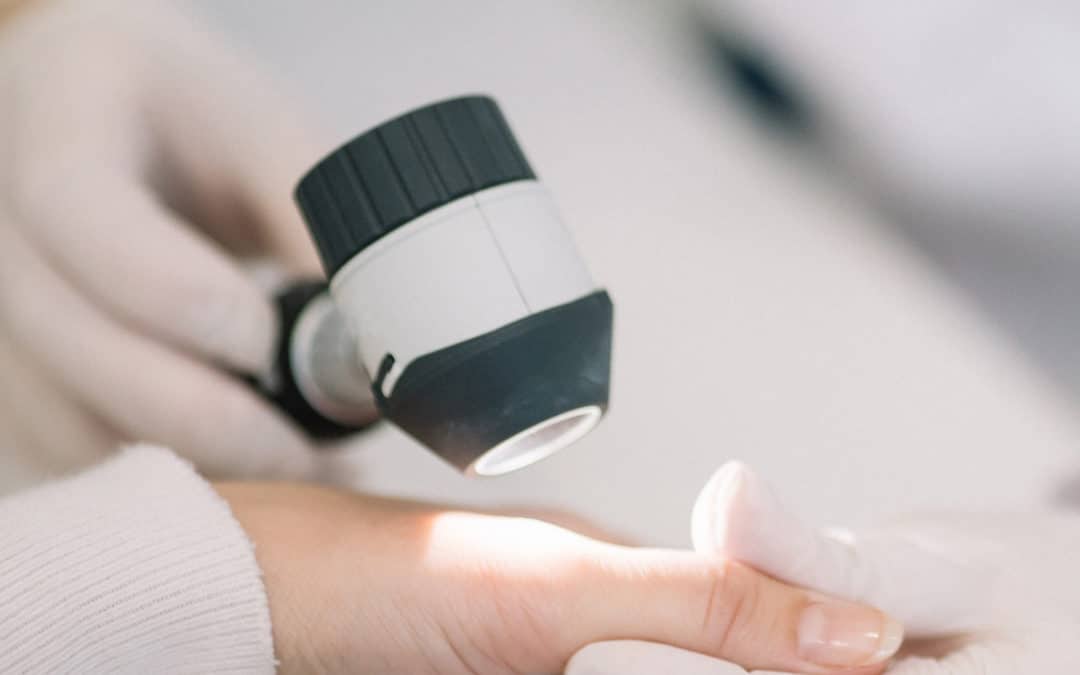
The provider may use a dermatoscope, a handheld magnifier with a light, to look more closely at individual moles. Most of the exam is visual and takes 10 to 20 minutes. You stay in control throughout, and you can decline examination of any area you’d prefer not to have checked.
If Something Looks Suspicious
If your dermatologist sees a spot that warrants a closer look, the usual next step is a biopsy. This is a small, in-office procedure done with local numbing medication. A sample of the spot is removed and sent to a pathology lab, and results typically come back within a week or two.
Most biopsies turn out to be benign. When a biopsy does identify a skin cancer, catching it at this stage usually means a simpler treatment with a better outcome. That’s the whole point of the exam: to find things early, when they’re easiest to handle.
How to Prepare for Your Visit
A few small steps make the appointment more useful. Come with bare nails, since dermatologists check the nail beds for unusual pigment. Skip heavy makeup so the skin on your face and neckline is easy to see. If you have specific spots you want examined, note their locations ahead of time, or take a quick phone photo so you can point them out.
It also helps to think briefly about your history: any past skin cancers in your family, prior biopsies, medications that affect your immune system, and your typical sun habits. None of this needs to be exhaustive — your provider will ask follow-up questions as needed.
Taking the Next Step
If you’ve read this far and recognized yourself in any of the risk factors, consider this your nudge. Booking a mole check in Boise is a low-effort visit with a high potential payoff, and Melanoma Awareness Month is a natural time to put it on the calendar. Call our office to schedule a full-body skin exam, and in the meantime, do a quick self-check in the mirror this week. If anything looks new, different, or simply “off,” make a note of it and bring it up at your appointment.
Featured image: Photo by Pavel Danilyuk on Pexels.