
Most of us think about sunscreen the way we think about swimsuits: something to dig out around Memorial Day. In the Treasure Valley, that timing is already late. By the time the rafts are inflated and the patio umbrellas are up, your skin has been logging UV exposure for months — often at levels higher than people realize.
Why Boise’s UV Index Climbs Before You Notice
Boise sits at roughly 2,700 feet, and much of the surrounding Treasure Valley — from Eagle to the foothills to the ski runs at Bogus Basin — sits higher still. UV intensity increases about 10 to 12 percent for every 3,300 feet of elevation gain. Combine that with Idaho’s notably clear spring skies, and the UV index can reach a 6 or 7 on a sunny March afternoon. That is the same exposure level the National Weather Service flags as “high” and recommends protective measures for.
Most people associate burns with July heat, but UV damage is not about temperature. It is about radiation. A cool, breezy April hike on the Boise River Greenbelt can deliver more UV to your face than a humid summer evening in a lower-elevation city.
The Damage Adds Up Quietly
Skin does not reset each winter. The DNA changes that drive premature aging and skin cancer accumulate over years, and a meaningful share of that exposure happens during the months we tend to discount: spring drives, weekend yard work, kids’ soccer games at Settlers Park, an early-season round at Warm Springs.
Dermatologists often describe this as a “lifetime dose.” Every sunburn matters, but so does the unremarkable cumulative exposure between burns. That is the exposure that turns into the rough patches, mottled pigmentation, and pre-cancerous spots we start seeing on patients in their thirties and forties.
What Sun Damage Actually Looks Like
Sun damage shows up in predictable ways once you know what to watch for. Actinic keratoses appear as small, sandpapery patches, often on the scalp, ears, forearms, and the backs of hands. Solar lentigines — the brown spots people call age spots — are another common sign, though they have less to do with age than with hours logged outside. Fine lines around the eyes and mouth, broken capillaries on the cheeks and nose, and a generally uneven skin tone are all part of the same picture.
None of these are urgent on their own. But they are markers. They tell us your skin has absorbed enough UV that a closer look at the rest of the picture is worthwhile.
Why a Pre-Summer Screening Makes Sense
A skin cancer screening in Boise is most useful before your peak exposure season, not after. Spring screenings give us a clean baseline before new sun freckles, moles, and growths appear, which makes any summer changes easier to spot. They also catch existing concerns — basal cell carcinomas, squamous cell carcinomas, and early melanomas — while they are still small and straightforward to treat.
Idaho consistently ranks in the higher tier of states for melanoma incidence. That is not a scare statistic; it is a reflection of our outdoor culture, our elevation, and our demographics. The practical takeaway is that regular full-skin exams are reasonable preventive care here, in the same category as a dental cleaning or a routine physical.
What a Full-Skin Exam Involves
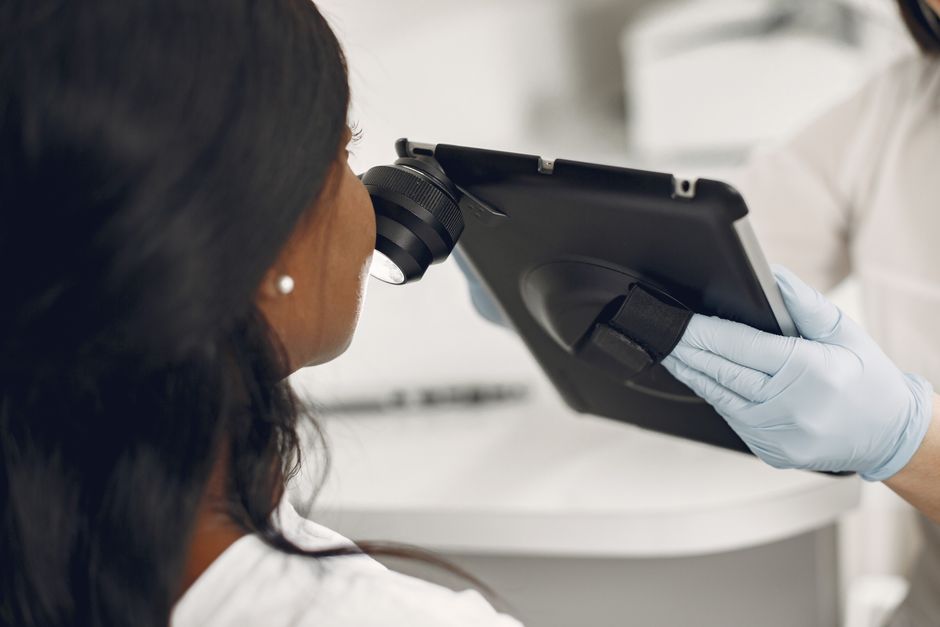
A standard screening is shorter and less involved than most patients expect. You change into a gown, and a dermatologist examines your skin from scalp to soles, using a handheld dermatoscope to look closely at any spots that warrant a second look. Most exams take 10 to 15 minutes. If something needs a biopsy, it is usually done the same visit with a small amount of local anesthetic.
If you have a personal or family history of skin cancer, fair skin, a history of blistering sunburns, or more than about 50 moles, annual screenings are a reasonable cadence. For lower-risk adults, every two to three years is often appropriate. Your dermatologist can recommend a schedule based on what they see.
Daily Habits That Actually Move the Needle
Sunscreen remains the most effective intervention we have, and it works best when it is boring — the same broad-spectrum SPF 30 or higher, applied every morning, regardless of the forecast. A nickel-sized amount for the face and another shot glass worth for exposed skin on the body is the rough guideline. Reapply every two hours when you are outside for extended periods.
Beyond sunscreen, the unglamorous tools matter: a wide-brimmed hat for yard work, UPF shirts for fishing and paddling, sunglasses that block UVA and UVB, and shade during the 10 a.m. to 4 p.m. window when UV is most intense. Window film on your car helps too; the left side of the face often shows more sun damage than the right in American drivers for exactly this reason.
A Practical Next Step
If it has been more than a year since a dermatologist looked at your skin — or if you have never had a full-skin exam — spring is the right time to schedule one. Make a note of any spots that have changed in size, color, or texture over the winter, and mention them at your visit. Bring a list of medications, since some increase photosensitivity. Then start the season with a baseline you and your dermatologist can build on, rather than catching up in September.
Featured image: Photo by Gustavo Fring on Pexels.