
Skin cancer is the most common cancer in the United States — more common than all other cancers combined. The good news is that when caught early, the most common forms are highly treatable. The challenge is that most early skin cancers don’t look or feel dramatic, and many people only notice them once they’ve progressed further than they should have. Knowing what to look for and when to get a professional check is one of the simplest, highest-value habits an adult can build.
Why Idaho Residents Should Pay Attention
Boise sits at higher elevation than many U.S. cities, which means the sun reaches the ground with less atmospheric filtering. Outdoor lifestyles common to the Treasure Valley — hiking, skiing, boating, gardening, and time on the rivers and lakes — add up to significantly more cumulative UV exposure than residents in cloudier or lower-elevation regions.
Cumulative UV exposure is the primary driver of basal cell and squamous cell carcinomas, the two most common skin cancers. Severe sunburns, particularly in childhood and adolescence, are the strongest risk factor for melanoma, the most dangerous form. Idaho’s combination of elevation, outdoor culture, and clear-sky days makes routine skin awareness more important than many residents realize.
The ABCDEs of Mole Evaluation
The most widely used framework for evaluating moles at home is the ABCDE method:
A — Asymmetry. If you drew a line through the middle of the mole, would the two halves match? Benign moles are usually symmetric. Asymmetric moles warrant closer evaluation.
B — Border. Benign moles have smooth, even borders. Irregular, scalloped, or poorly defined edges can be a warning sign.
C — Color. Most benign moles are a single shade of brown. Moles with multiple colors — brown, black, red, white, or blue — deserve professional evaluation.
D — Diameter. Moles larger than six millimeters (about the size of a pencil eraser) are more likely to be problematic, though smaller moles can also be concerning if they have other warning signs.
E — Evolving. Any mole that’s changing in size, shape, color, or texture should be evaluated. Change is one of the most important warning signs and one that home checks are uniquely well-suited to catch.
Other Warning Signs Beyond Moles
Not all skin cancers look like moles. Basal cell carcinoma often appears as a pearly or waxy bump, a flat flesh-colored or brown scar-like lesion, or a sore that bleeds, scabs over, heals, and then returns. Squamous cell carcinoma can show up as a firm red nodule, a rough scaly patch, or a sore that doesn’t heal.
Anything that bleeds, scabs, doesn’t heal within a few weeks, or just looks different from the surrounding skin deserves a professional look. The “something just looks off” feeling that patients often describe is worth trusting — people are surprisingly good at noticing changes on their own skin even when they can’t articulate what’s different.
How to Do an At-Home Skin Check
A monthly self-examination takes about ten minutes and substantially improves your odds of catching anything concerning early. Use a full-length mirror and a hand-held mirror in a well-lit room. Start at your scalp — using a comb or hairdryer to part hair — and work systematically down: face, neck, ears, chest, abdomen, both sides of arms, palms, fingernails, then back, buttocks, legs, between toes, and the soles of feet.
Photograph any moles you want to track over time. Comparing photos month to month is far more reliable than memory and is the easiest way to identify subtle changes early.
When You Should See a Dermatologist
Beyond suspicious moles or lesions, several factors warrant a regular professional skin exam. A personal or family history of skin cancer, more than fifty moles, fair skin that burns easily, history of significant sun exposure or tanning bed use, organ transplant history, or a weakened immune system all elevate risk.
For patients with elevated risk factors, annual full-body skin exams are typically recommended. For patients with average risk, every one to three years is reasonable, with more frequent exams if anything new or changing appears between visits.
What to Expect at a Skin Cancer Screening
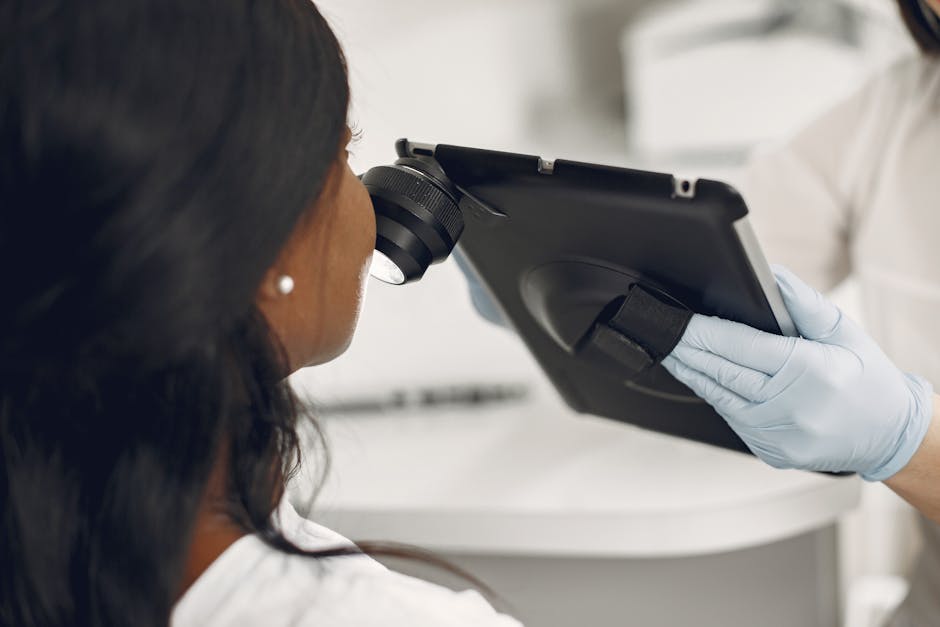
A professional skin exam is straightforward. The dermatologist examines the entire skin surface using bright lighting and often a dermatoscope — a handheld magnifier that lets them see structural features of moles invisible to the naked eye. The exam usually takes ten to twenty minutes.
If anything suspicious is identified, a biopsy may be recommended. This involves removing a small sample of the lesion under local anesthesia for laboratory analysis. Most biopsies take only a few minutes and produce results within a week. Many lesions that look concerning turn out to be benign — but the lesions that aren’t are dramatically easier to treat when caught at this stage rather than later.
Treatment Outcomes Improve Dramatically with Early Detection
The five-year survival rate for melanoma detected before it has spread is over 99 percent. For melanoma that has spread to distant parts of the body, that number drops to around 35 percent. Basal cell and squamous cell carcinomas have similar trajectories — nearly always curable when caught early, and significantly more complex when caught late.
Early detection is one of the highest-impact things you can do for your long-term health, and it requires nothing more than awareness, a monthly self-check, and a periodic professional exam.
Make Skin Cancer Awareness a Habit
May is Skin Cancer Awareness Month, but the habits that protect you year-round are the ones that matter most. Daily sun protection, regular self-checks, and a periodic professional skin exam together cover the basics. If you’ve never had a full-body skin exam, or if it’s been more than a few years, scheduling one is a small investment with potentially significant return. Catching something early often means a quick in-office procedure rather than a more complex intervention — and peace of mind in either direction.
Featured image: Photo by Gustavo Fring on Pexels.