
If you have been meaning to schedule a skin check but keep pushing it off, you are not alone. Most people delay their first skin cancer screening because they are not sure what the appointment will look like. The exam is quicker and more straightforward than most patients expect. Here is a plain description of what happens from the moment you walk in to the moment you leave.
Why the exam is worth the appointment
Idaho sits at higher elevation than much of the country, and the Treasure Valley gets a lot of clear, high-UV days. That combination means adults who have spent years hiking the Boise Foothills, working outside, boating at Lucky Peak, or skiing at Bogus Basin often have more sun exposure on their skin than they realize. Skin cancer is one of the most common cancers in the United States, and it is also one of the most treatable when caught early.
A full-body skin cancer screening in Boise is designed to catch changes early, before a small spot becomes a bigger problem. For most adults, a yearly check is a reasonable baseline. People with fair skin, a history of sunburns, a family history of melanoma, or a lot of moles may be asked to come in more often.
Before the visit
There is very little you need to do to prepare. On the day of your appointment, skip nail polish on fingers and toes so the nail beds can be examined, and go easy on makeup if possible. Pull long hair back or bring a tie, since the scalp is part of the exam. If you have a specific mole or spot that has been bothering you, make a note of where it is and when you first noticed a change.
You will be asked about your personal and family history: past skin cancers, previous biopsies, blistering sunburns, tanning bed use, and any medications that affect the immune system. This context helps the provider know where to look most carefully.
Getting settled in the exam room
When you are brought back, a medical assistant will confirm your history and ask you to change into a gown. You will keep your underwear on. The gown opens in the back and can be adjusted section by section during the exam, so you are never fully uncovered. A chaperone is available on request, and many patients appreciate having one in the room.
The room itself is a standard clinic room with a bright, focused overhead light. There is nothing unusual about the setup, and the exam is not painful.
The head-to-toe exam, step by step
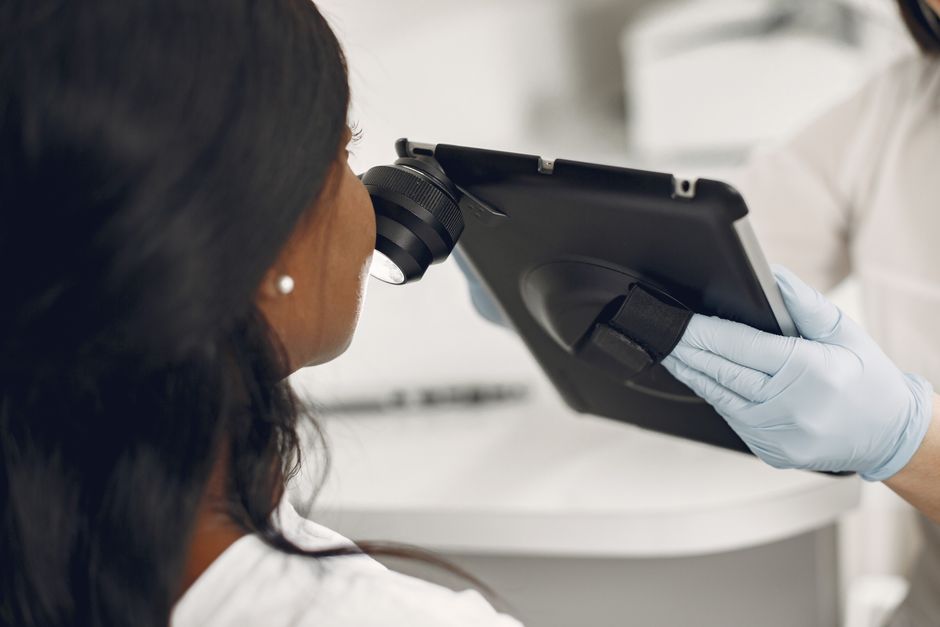
Your dermatology provider will typically start at the scalp and work downward. Using a handheld tool called a dermatoscope—essentially a lighted magnifier—they look closely at the skin surface and the patterns within individual spots. The dermatoscope reveals details that are not visible to the naked eye and helps distinguish harmless spots from ones that need a closer look.
From the scalp, the exam moves to the face, ears, neck, and behind the ears. Then the arms, hands, fingers, and nails. The chest, abdomen, and back are checked next, followed by the legs, feet, and the spaces between the toes. The provider will also examine areas that rarely see the sun, since some skin cancers appear there too. The full check usually takes ten to fifteen minutes.
Throughout the exam, the provider will often narrate what they are seeing: a benign freckle, a common mole, a sun spot, a skin tag. Feel free to point out anything that itches, bleeds, changes, or simply looks new to you. Patients notice their own skin better than anyone, and that information is genuinely useful.
If something needs a closer look
If a spot looks suspicious, the provider may recommend a biopsy. This is a short, in-office procedure done the same day in most cases. The area is numbed with a small injection of lidocaine, and a shallow sample of skin is removed and sent to a lab. Most patients describe the numbing pinch as the only uncomfortable part. You leave with a small bandage and simple wound care instructions.
Biopsy results usually come back within one to two weeks. The office will call you with the findings and, if any treatment is needed, walk you through the next steps. Many biopsies come back benign; the point of taking the sample is to be certain rather than to guess.
After the appointment
Most patients leave with a clean bill of health and a recommended interval for their next screening. You may also get personalized advice on sun protection, self-checks at home, and any spots to keep an eye on. A monthly self-exam in front of a mirror—paying attention to anything new, changing, or asymmetrical—is a good habit between visits.
If you had a biopsy, keep the area clean and covered as instructed, and avoid heavy exercise or swimming for a few days while it heals.
Scheduling your first screening
The hardest part of a skin cancer screening is usually deciding to make the appointment. Once you are in the room, the exam is quick, professional, and easy to fit into a normal weekday. If it has been more than a year since your last check, or if you have never had one, this is a good time to put it on the calendar. Call the office to schedule, and mention any specific spots you would like reviewed so the team can plan time accordingly.
Featured image: Photo by Gustavo Fring on Pexels.